Billing Boats
In the early 1950s, the Danish architect and former RAF war pilot Ejnar Billing exhibited a self-made model of a fishing boat in the hobby shop of his wife. After the photos of the model appeared in one magazine, Mr. Billing paid orders to put up tens of pieces of the same model. Because it was not enough to handle it, it occurred to him that he would offer the boat as a kit - the first mass-produced kit with a wooden skeleton with a keel, ribs and a plank that imitates as much as possible the construction of real ships. This method of construction quickly took hold and Mr Billing's models began to conquer the world. In 1958 a family company was established, bearing the name of Billing Boats. Over the years, the design of the models has been improved and modernized, the use of plastic moldings was introduced in the 1960s, then the CNC machines were launched and at the turn of the 1980s and 1990s Billing Boats began to use laser cutting of parts. Today, the company has been managing the third generation of Billing, and floating RC models and non-floating desk mock-ups are still the top leaders in ship modeling.
We are pleased to offer you a series of Billing Boats, from which you can build beautiful detailed sophisticated floating mock-ups with remote controls or create a stylish complement to the interior of your flat with a salty sea scent and calling away ...
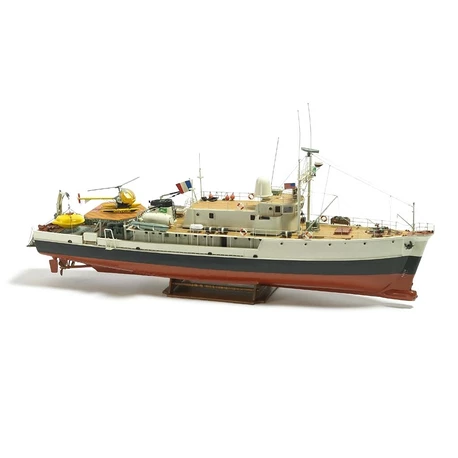
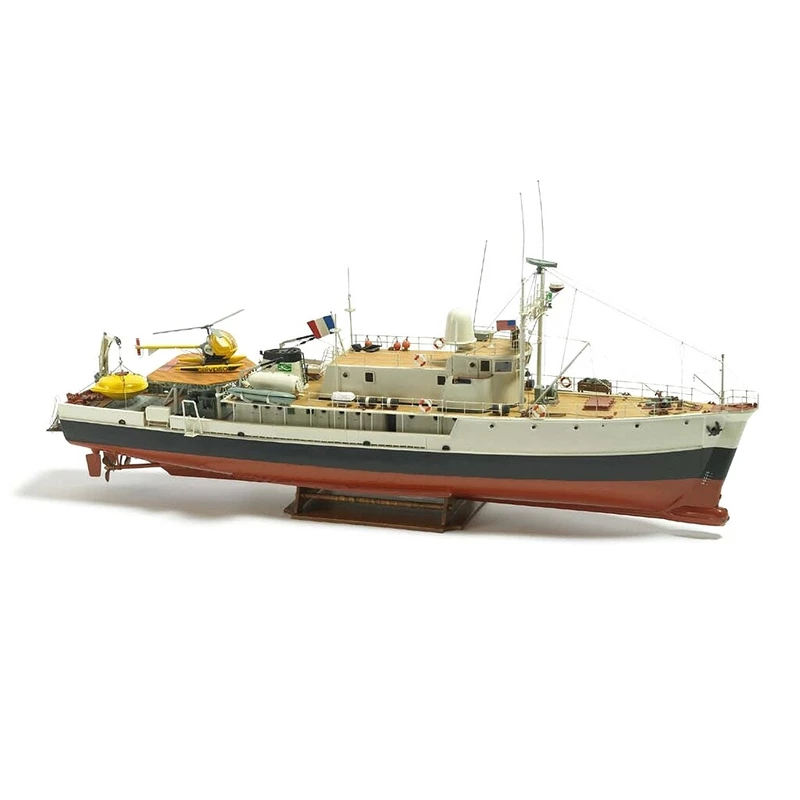
Calypso 1:45
When the 21st March, 1942, at Ballard Shipyard in Seattle, USA, launched a BYMS Mark 1 motor minesweeper for the British Royal Navy, they certainly did not know what legend had just begun. The ship served in the Mediterranean under the name HMS J-826 (later BYMS-2026) in 1943, after the war for some time dilapidated at anchorages in Malta, in 1949 underwent reconstruction for a cruise ferry between Malta and the neighboring island of Gozo."
In this form, under the name of Calypso, a former French navy officer, co-author of the aqualung - an open-circuit breathing apparatus that allowed the massive development of sport diving, oceanologist Jacques-Yves Cousteau. Thanks to sponsors such as the British industrial tycoon TL Guiness (funded purchase and rebuilding of the ship) or the Monaco Prince, Calypso was specially designed as a floating base for underwater research. An underwater observatory was added to the bow, a transition and decompression chamber for divers, a crane with a legendary platter minipump, Zodiac inflatable motor boats, a helicopter platform, and a plethora of research facilities and equipment. From the early 1950s until 1996, when it sank in the aftermath of a collision with a port barge, Calypso crossed the sea and the oceans, rivers and lakes and faithfully served Jacques-Yves Cousteau, his son Philippe, a team of French divers and scientists and filmmakers Worldwide. Probably few have seen one of the documentaries or have not read any of the books in which Calypso plays one of the major roles. The wreck of the ship was later lifted, triggering a series of long pulls and litigation about her next fate - but now it seems that after a general overhaul, Calypso may return to the waves of the seas.
The real ship has a 42-m-long Oregon pine (to attract magnetic mines) hull, a 360-tonne displacement and powered by two 580 HP engines that gave it up to 10 knots (the original minesweeper had a length of 41 m, displacement 270 tons , with two 800 HP engines speeds up to 15 knots, carrying one 76 mm and two 20 mm cannons and two deep-sea chargers). The 1:45 scale kit is designed for experienced shipbuilder builders.
The Calypso has a fuselage made of plastic molding with internal plywood reinforcements, deck and superstructure made of plywood and plastic parts."
The kit includes plastic molding of the fuselage and other plastic and wood parts needed to complete the model, maker accessories (eg positional lights, anchors, minipumps, helicopters, etc.), boat shafts with housings and three-blade marine screws.
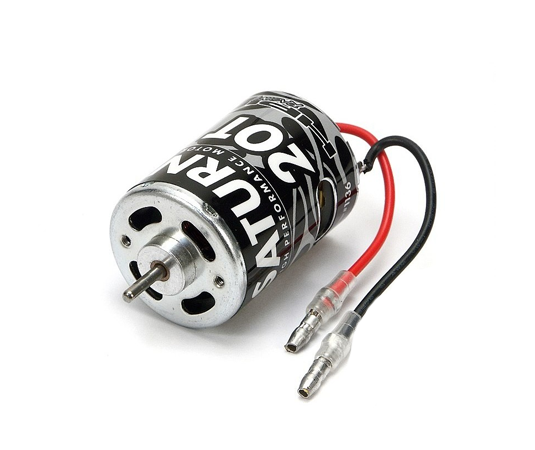
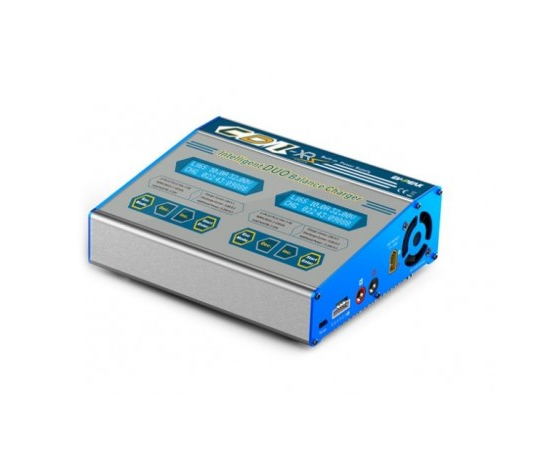
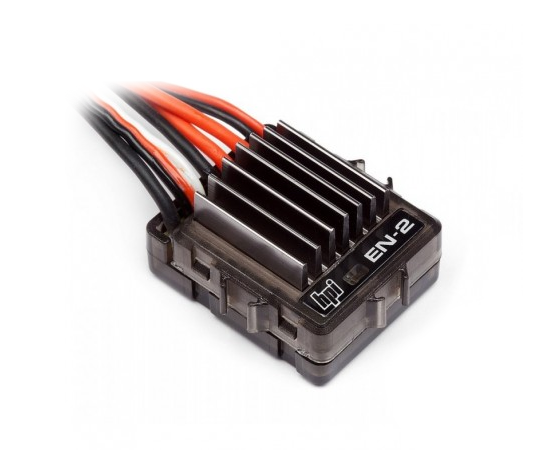
Two 400-480 series DC motors with at least 15 A bi-directional controllers (motor) and 6-7 cell NiMH or 2-3S LiPo accumulators with a capacity of 3-5,000 mAh are designed to drive the model.
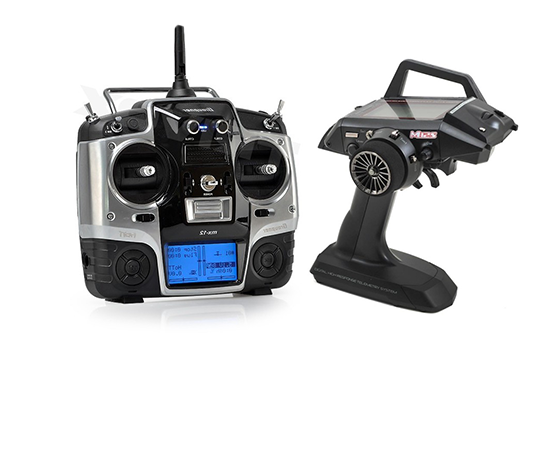
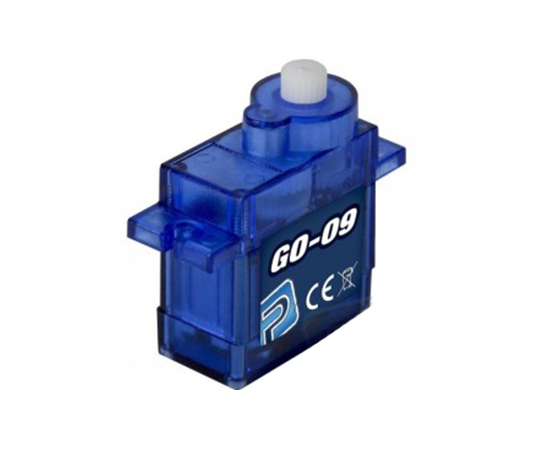
In principle, the most common two-channel RC set is sufficient to control the basic functions; for the control of the rudder, the standard standard servo will satisfy. But for the right maker, it's obviously a "duty" to add as many macerate functions as possible (lights, sound module, independent engine control, etc.), requiring the use of a multi-channel RC kit - and the channels are never enough.
Tip: The detail of the fuselage in the 1: 1 scale, which is in contravention of the original manual on page 9, is printed in the "Download" section.
Tip: Photo album from the Calypso building (documented until the beginning of building of the superstructure) can be found here: https://photos.app.goo.gl/FzuV7LLK93khnbT7A
| Scale | 1:45 |
| Length [mm] | 940 |
| Width [mm] | 170 |
| Height [mm] | 330 |
| Controlled functions | M (2), LK |
| Building demand | S3 |
| Flight challenge | P1 |
"